Ordering donuts for a group in Forest City is a practical job with a practical method: count the people honestly, build the mix around the classics, handle the allergy question before the boxes leave the counter, and get the timing right so the donuts arrive fresh. Done well, it takes ten minutes of planning and makes you look like you have done it a hundred times. This how-to walks the whole job in order, marking which parts you handle yourself and where the shop, in this case Davis Donut House, does the heavy lifting for you.
The self-service part is the thinking: headcount, mix, and communication. The professional part is everything involving hot oil and a 5 a.m. start. Nobody needs you to fry anything. They need the right number of the right donuts in the room at the right time, plus a label on the box.
Before you order: the counts that hold up
Start from how the group will actually eat. If donuts are a morning extra next to coffee, plan on about one and a half donuts per adult; some eat one, some eat two, some skip. If donuts are the breakfast, plan on two per adult and something else alongside, because two donuts alone leave people hungry by ten. For a classroom, plan one per child plus two or three spares for the teacher and the inevitable dropped donut. These numbers look unambitious and prove out again and again; the failure mode in group donut ordering is almost always a mountain of leftovers, not a shortage.
- Fix the headcount and the role of the donuts. Count actual attendees, not the whole department, and decide whether donuts are the meal (two per adult) or the extra (one and a half per adult, one per child).
- Ask the allergy question early. Give the office or the teacher a day to flag nut, milk, egg, or wheat issues. Donuts commonly involve all four, and shared fryers make cross-contact possible; knowing early shapes the order.
- Build the mix around classics. Roughly half glazed and plain cake, a quarter frosted, a quarter filled or seasonal. Four to six varieties beat twelve singles, because most people get a first choice.
- Place the order with the plan stated. Tell the shop the count, the mix, the pickup time, and any allergy needs. A separately boxed plain option is a reasonable ask when the shop knows ahead.
- Time the pickup to the eating. Donuts are best the morning they are fried. Pick up close to serving time rather than the night before, and keep boxes closed and flat in the car, not stacked in a warm trunk for an hour.
- Set out, label, and step back. Open the boxes where people gather, put a plain sign on any allergy-aware box, and set the coffee next to them. Then let the donuts do what donuts do.
Where your job ends and the shop's begins
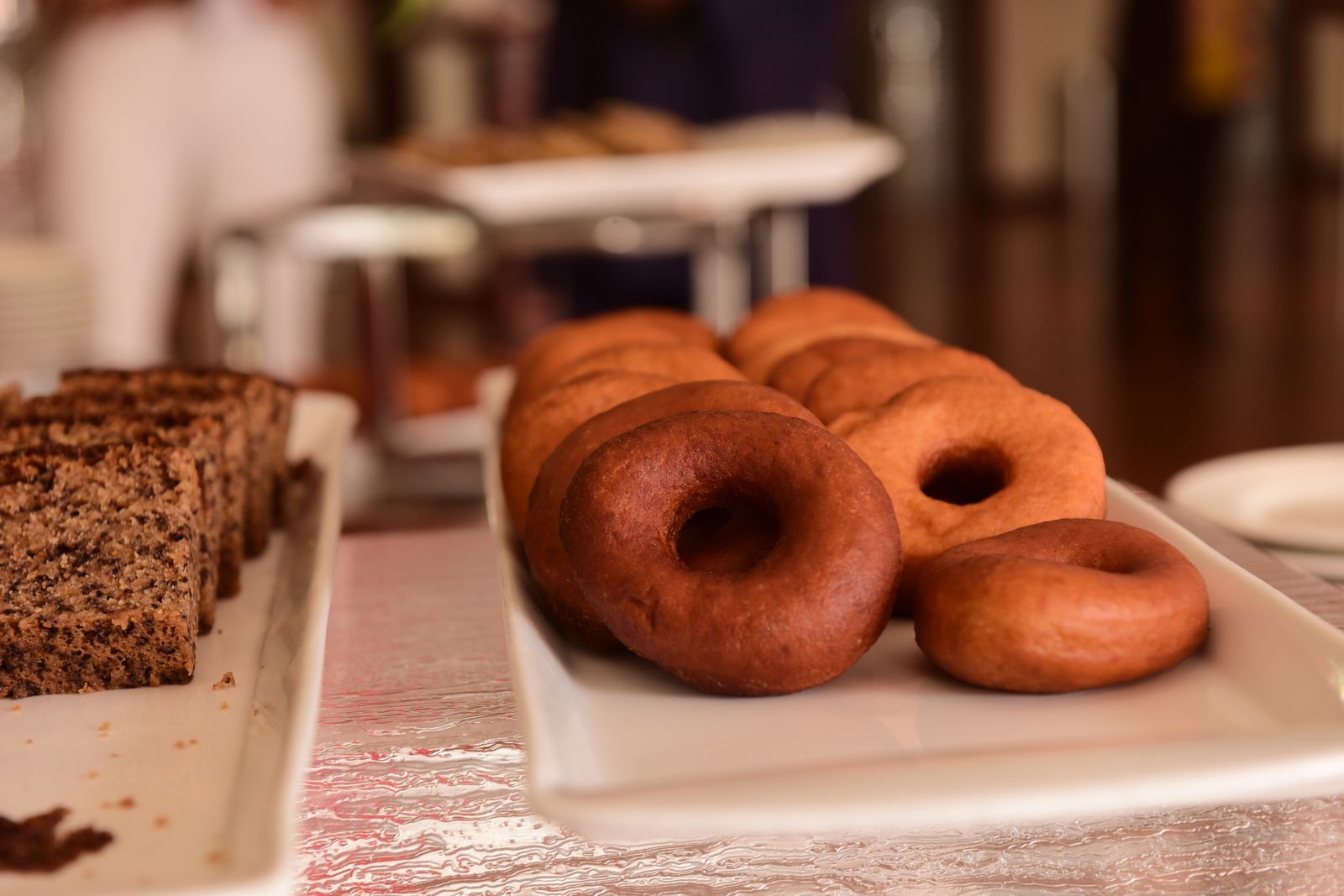
Everything about freshness is the shop's craft: doughs mixed and proofed in the early hours, frying in batches, glazing while warm. Your contribution to freshness is purely logistical: order a quantity the shop can plan around, pick it up when you said you would, and serve it the same morning. Large orders especially reward a heads-up, because a shop can fold a five-dozen order into its fry schedule far better with notice than as a surprise at the counter during the morning rush. That is the honest line between the parts: you bring information and timing, they bring a 5 a.m. alarm and a fryer.
Classrooms add one small professional courtesy. Teachers manage the food rules of their rooms, including school policies on outside treats and known allergies in the class, so the teacher is your approval step, not a formality. A quick message asking what is allowed, and how many children, turns a surprise box into a coordinated one, and it protects the one child for whom a donut is a medical question rather than a treat.
The mistakes this method prevents
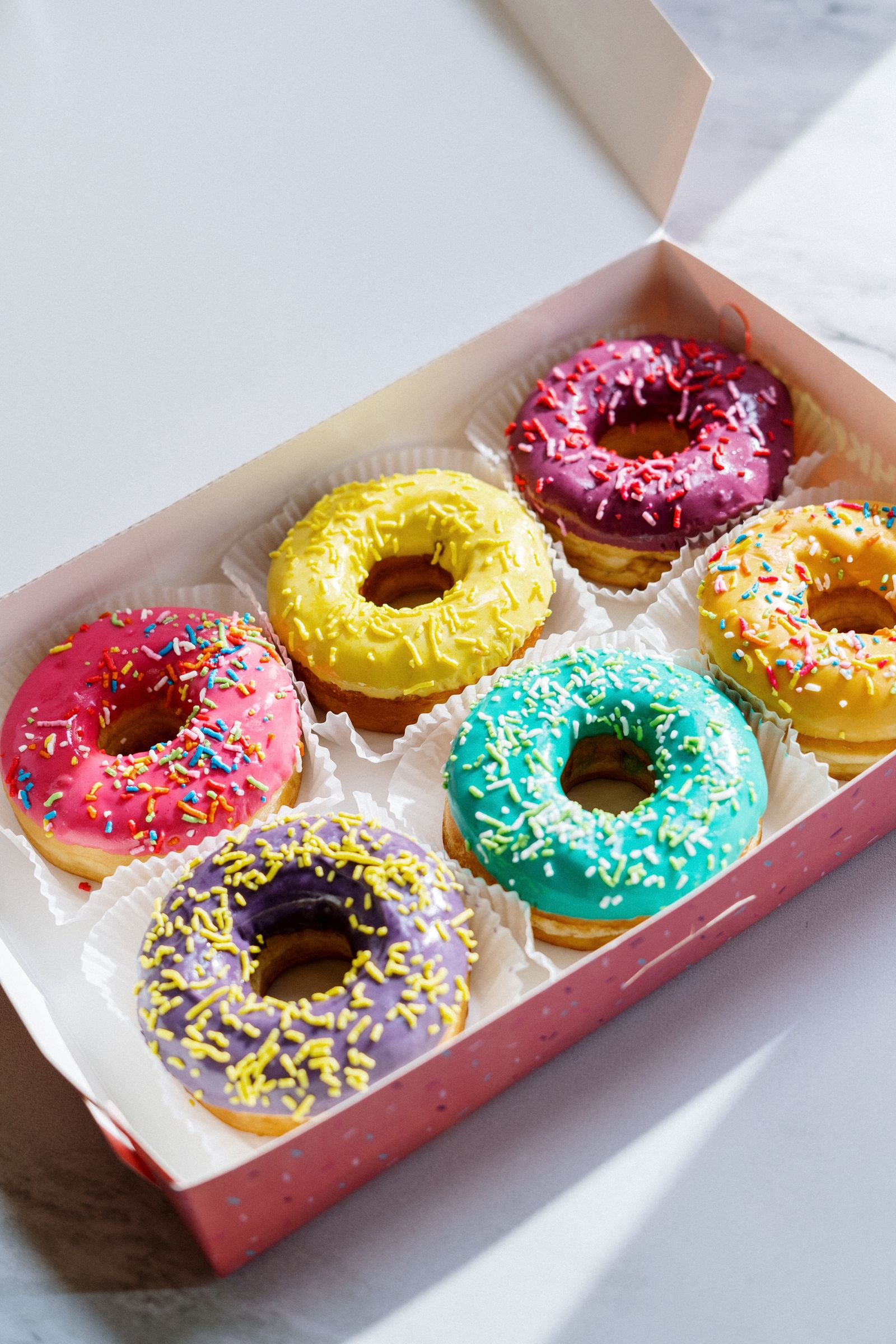
Three errors account for most bad group orders. Overbuying on a one-per-person-times-two guess, which wastes food and quietly signals guesswork. Under-mixing, ordering all one flavor because it is your favorite, which guarantees a third of the room settles. And ignoring the allergy question until the boxes are open, when the only fix left is keeping one person out of the treat entirely. The steps above are unglamorous because the job is unglamorous. Get the counts, the mix, the flags, and the timing right, and the donuts make the morning without anyone remembering the logistics at all.
Common questions
How many donuts should I order for an office of 15?
About two dozen if donuts are an extra with coffee, using one and a half per person, or two and a half dozen if they are the whole breakfast. Classics should make up about half the mix.
How far ahead should I place a large donut order?
Give the shop notice when you can, ideally the day before for multi-dozen orders. It lets them plan batches into the morning fry schedule instead of absorbing a surprise at the counter.
What is the safest way to handle a nut allergy in the group?
Ask ahead, tell the shop when ordering, and request a separately boxed plain option with a label. Shared fryers mean cross-contact is possible, so when in doubt, the allergic person's treat should come from a source that fits their needs.
Photos in this guide are representative stock images.
← All guides from Davis Donut House← Back to Davis Donut House